

11.5: Edge of Life – Dubai Ruler launches Dh1 billion Ramadan drive to save five million children
Global partnerships mobilised to tackle acute malnutrition crisis
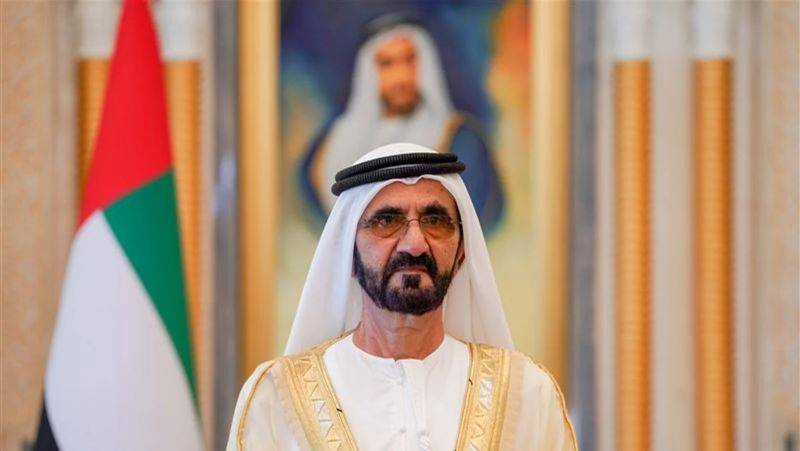
DUBAI – His Highness Sheikh Mohammed bin Rashid Al Maktoum, Vice President and Prime Minister of the UAE and Ruler of Dubai, has launched the 11.5: Edge of Life Ramadan campaign, a global humanitarian initiative aimed at rescuing five million children from death caused by hunger and malnutrition.
Announced on Friday ahead of the holy month of Ramadan, the campaign seeks to mobilise at least Dh1 billion in donations locally and internationally. It focuses on children under the age of five living in the world’s most vulnerable communities, particularly those affected by conflict, forced displacement, natural disasters and the worsening impacts of climate change.
His Highness Sheikh Mohammed said the initiative continues the UAE’s annual tradition of launching a Ramadan humanitarian campaign “from the people of the UAE to the world”, reaffirming that it is neither in the nation’s character nor its values to witness such a humanitarian tragedy and remain inactive.
Mohammed bin Rashid: This latest Ramadan campaign embodies the noble values on which the UAE was founded and is rooted in the nation's commitment to serving as a global model of giving and generosity. Tens of millions of children around the world suffer from hunger. Our goal is… pic.twitter.com/PWAMKyloXd
— Dubai Media Office (@DXBMediaOffice) February 13, 2026
Global hunger crisis
The figures underpinning the campaign illustrate the scale and urgency of the global hunger crisis. Statistics show that five children under the age of five die every minute due to hunger and malnutrition.
Last year alone, more than 118 million children worldwide suffered from malnutrition. Of those, an estimated 2.6 million children died as a direct consequence of hunger. Malnutrition is linked to 45 per cent of all deaths among children under five globally, making it one of the leading causes of child mortality.
In 2025, 118 million children were reported to have faced hunger in one of the largest waves affecting young people in recent years. Around 181 million children lack access to the minimum nutrition required for healthy growth and development. One in four children under five suffers from acute malnutrition, a condition that weakens the immune system, increases vulnerability to disease and significantly heightens the risk of death.
The campaign aims not only to rescue five million children from life-threatening conditions but also to protect a further 30 million children from falling into severe hunger.
The 11.5 threshold
At the heart of the initiative lies a number that carries clinical and humanitarian significance. “11.5” refers to the mid-upper arm circumference (MUAC) measurement in centimetres used to detect acute malnutrition in children aged between six months and five years.
According to guidelines issued by the World Health Organisation and UNICEF, a MUAC reading below 11.5 cm is one of the principal criteria used to diagnose severe acute malnutrition. Children who fall below this threshold require urgent medical intervention, as delayed treatment can result in fatal consequences.
The MUAC measurement is widely used in fragile environments such as refugee camps, areas affected by armed conflict and regions struck by natural disasters. It is a rapid, simple and cost-effective screening method that does not require complex equipment, making it particularly suitable in emergency settings where conventional weight and height measurements are difficult to obtain.
Health workers and caregivers can use the colour-coded MUAC tape to determine instantly whether a child is in danger. A reading under 11.5 cm signals wasting, the loss of essential muscle mass and nutritional reserves, and indicates a critically weakened immune system.
By naming the campaign “11.5: Edge of Life”, organisers have transformed a medical measurement into a global call for action, highlighting the fine line that separates timely intervention from irreversible loss.
Global partnerships
The campaign is being implemented under the umbrella of Mohammed bin Rashid Al Maktoum Global Initiatives, in partnership with leading international organisations including UNICEF, Save the Children, Children's Investment Fund Foundation and Action Against Hunger.
These partnerships are designed to ensure that funds raised through the campaign are channelled into sustainable programmes and projects that directly combat child hunger and malnutrition. The initiative seeks to support life-saving nutritional interventions, expand access to therapeutic feeding programmes and strengthen early detection mechanisms in high-risk communities.
Mohammad Al Gergawi, Secretary-General of MBRGI, highlighted the urgency of the campaign, stating that millions of children continue to suffer from life-threatening malnutrition. He noted that the goal extends beyond immediate rescue efforts to include preventive measures aimed at shielding tens of millions more from the threat of hunger.
Al Gergawi also pointed to the mounting funding shortfalls faced by international organisations. Many humanitarian agencies are currently navigating reduced resources at a time when demand for assistance is increasing, particularly in countries grappling with overlapping crises including armed conflict, economic instability, forced displacement and climate-related disasters.
A stark reality
Global hunger and malnutrition are driven by interconnected forces rather than a single cause. Armed conflict disrupts food production and supply chains, while economic crises and rising food prices limit families’ ability to secure basic nutrition. Environmental disasters fuelled by climate change, including droughts and floods, further undermine food security in already fragile regions.
Forced displacement compounds these challenges, leaving families dependent on humanitarian assistance in camps or informal settlements. In such contexts, children are often the first and most severely affected.
The campaign underscores that hunger directly threatens the right to life and undermines the foundations of health, growth and stability in vulnerable communities. It positions early intervention as both a humanitarian necessity and a moral imperative.
Ramadan tradition
The 11.5: Edge of Life campaign continues a series of high-impact Ramadan initiatives launched under Sheikh Mohammed’s directives over recent years.
In 2020, the 10 Million Meals campaign collected more than 15.3 million meals, supported by donations from individuals and institutions across the public and private sectors.
In 2021, the 100 Million Meals campaign distributed 220 million meals across 30 countries on four continents, significantly exceeding its original target.
The following year, the 1 Billion Meals campaign reached its goal in under a month, providing food aid in 50 countries with the backing of 320,868 contributors.
In Ramadan 2023, the 1 Billion Meals Endowment campaign raised Dh1.075 billion by the end of the holy month, creating a sustainable fund to support long-term food security efforts.
The Mothers’ Endowment campaign in Ramadan 2024 established a Dh1 billion endowment to support sustainable education for millions worldwide and exceeded its target by raising over Dh1.4 billion before the end of Ramadan.
In 2025, the Fathers’ Endowment campaign sought to honour fathers by creating a Dh1 billion healthcare endowment for the poor and needy. The campaign achieved unprecedented success, raising more than Dh3.7 billion before the close of the holy month.
Each of these initiatives demonstrated widespread participation from the UAE community and reinforced the country’s position as a leading contributor to global humanitarian efforts.
Institutional impact
Founded in 2015, Mohammed bin Rashid Al Maktoum Global Initiatives consolidates more than 30 initiatives and institutions supported by Sheikh Mohammed over the past two decades. Its work spans five main pillars: humanitarian aid and relief, healthcare and disease control, spreading education and knowledge, innovation and entrepreneurship, and community empowerment.
Since its establishment, MBRGI has spent over Dh13.8 billion on humanitarian and relief efforts, benefiting 788 million people in 118 countries. In 2024 alone, total spending across its five pillars exceeded Dh2.2 billion, reaching approximately 149 million beneficiaries worldwide.
The 11.5: Edge of Life campaign builds upon this institutional framework, leveraging established partnerships, operational expertise and global networks to deliver targeted assistance where it is most needed.
By focusing on early detection and rapid intervention, the campaign seeks to prevent children from crossing the critical 11.5 cm threshold. It positions a simple medical measurement as a powerful reminder that timely action can mean the difference between recovery and loss, and calls for collective participation to address one of the most pressing humanitarian challenges of the current era.